About this ebook
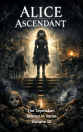
It starts with an empty workshop. Tools untouched. Lights still burning. A chair pushed back as though someone stood up mid‑thought and never returned. The Toymaker is simply gone — no struggle, no farewell, no trace. The town, already frayed by years of strange events, reacts with a mixture of fear, speculation, and uneasy relief. Some believe he fled. Others whisper he was taken. A few insist he chose to leave, though none can explain why.
Alice remains. And she is changing.
Some say she is growing — not in size, but in presence, as though the absence of the Toymaker has given her room to expand. Others claim she wanders the workshop at night, pausing in doorways as if listening for footsteps that never come. A handful of residents swear they have seen her beyond the workshop walls, moving with purpose, appearing in places she should not be.
And then the rumours begin: Alice is creating something new.
The dolls, once passive watchers, start behaving with a strange independence. Some gather in clusters, as though awaiting instruction. Others appear in patterns that echo the arrangements found in the vanished streets. A few seem to follow residents home. The town grows quieter, more watchful, as though holding its breath for whatever comes next.
Authorities attempt to investigate the Toymaker’s disappearance, but the case dissolves like all the others. Witness accounts contradict themselves. Evidence shifts. Even the detective who once pursued the legend refuses to speak of what he saw. The workshop becomes a place of speculation — a shrine, a warning, a threshold.
These twenty narrative poems trace the aftermath of the Toymaker’s absence and the force that rises to fill it. Each poem stands alone, yet together they form the next movement in the expanding mythos, capturing the moment when Alice steps out of the Toymaker’s shadow and into her own.
This is the book where the Toymaker vanishes. This is where Alice begins to change. This is where the legend prepares to become something new.
Discover more
About the author
David James is a writer who works at the intersection of poetry, folklore, and atmospheric storytelling. His books are built from short‑form narrative verse — concentrated, cinematic pieces that deliver complete stories in distilled form. He treats each poem as an engineered moment: a glimpse into a world where the ordinary slips, the uncanny surfaces, and the boundaries between memory and myth begin to blur.
His work rejects spectacle in favour of presence. Rather than relying on gore or shock, he builds tension through silence, implication, and the things seen from the corner of the eye. Across his growing catalogue, he explores how legends form, how rumours spread, and how a single strange event can reshape an entire community. The Toymaker series is his most ambitious project to date: a multi‑volume mythos told through hundreds of narrative poems, each one a self‑contained story that contributes to a larger, evolving world.
David’s writing is driven by precision and discipline. He approaches verse as a structural craft — a way of compressing narrative into its most potent form. His poems draw on the atmosphere of abandoned places, the psychology of fear, and the quiet rituals of everyday life. He is interested in how stories travel, how they change in the telling, and how they become part of the cultural landscape.
With a rapidly expanding body of work and a commitment to producing original books at scale, David aims to build a catalogue that functions as both literature and legend. His stories are designed to be read quickly but remembered slowly, leaving echoes that linger long after the final line.
He writes from the United Kingdom, where he continues to develop new sequences, new mythologies, and new experiments in narrative verse — always returning to the same guiding principle: that the most powerful stories are the ones that begin quietly, then refuse to let go.
A complete list of the author’s published works can be found in the back matter of this book, where fully clickable links to both of his webpages are also included in the Author’s Notes section.