About this ebook
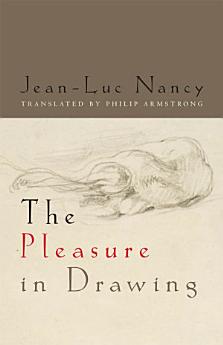
Recalling that drawing and design were once used interchangeably, Nancy notes that drawing designates a design that remains without project, plan, or intention. His argument offers a way of rethinking a number of historical terms (sketch, draft, outline, plan, mark, notation), which includes rethinking drawing in its graphic,filmic, choreographic, poetic, melodic, and rhythmic senses.
If drawing is not reducible to any form of closure, it never resolves a tension specific to itself. Rather, drawing allows the pleasure in and of drawing, the gesture of a desire that remains in excess of all knowledge, to come to appearance. Situating drawing in these terms, Nancy engages a number of texts in which Freud addresses the force of desire in the rapport between aesthetic and sexual pleasure, texts that also turn around questions concerning form in its formation, form as a formative force. Between the sections of the text, Nancy has placed a series of “sketchbooks” on drawing, composed of a broad range of quotations on art from different writers, artists, or philosophers.
Discover more
About the author
Jean-Luc Nancy (1940–2021) was Distinguished Professor of Philosophy at the Université de Strasbourg and one of the late twentieth and early twenty-first century’s foremost thinkers of politics, art, and the body. His wide-ranging thought runs through many books, including Being Singular Plural, The Ground of the Image, Corpus, The Disavowed Community, and Sexistence. His book The Intruder was adapted into an acclaimed film by Claire Denis.