Third Class In Indian Railways: Restored Classics to Go Edition

· Otbebookpublishing
Ebook
38
Pages
Eligible

About this ebook

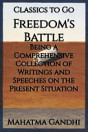
These essays and speeches reveal Gandhi at his most direct: exposing the daily humiliations of colonial India while arguing for a moral and cultural renewal rooted in truth, discipline, and self-respect. From the squalor of third-class railway travel to the politics of schooling, clothing, and cooperation, he insists that reform must begin with ordinary life and with the dignity of the poorest people. Across the collection, Gandhi condemns neglect in public transport, urges education in the vernacular rather than English, and presents Ahimsa as a fearless, active force of love and justice. He treats co-operation not as a financial device but as an ethical discipline, tied to service, restraint, and the uplift of workers and weavers. His defense of Swadeshi extends even to dress, which he presents as a natural expression of identity rather than imitation of Europe. Together, these pieces form a powerful blend of social criticism, practical reform, and national self-building. This edition has been fully restored with modern typesetting, custom cover design.
These essays and speeches reveal Gandhi at his most direct: exposing the daily humiliations of colonial India while arguing for a moral and cultural renewal rooted in truth, discipline, and self-respect. From the squalor of third-class railway travel to the politics of schooling, clothing, and co...

Discover more

About the author

Mahatma Gandhi, born in 1869 in Porbandar, India, emerged as one of the most influential moral and political thinkers of the modern world. Trained in law in London and shaped by years in South Africa, he developed the principles of nonviolent resistance, self-discipline, and truthfulness that would guide his leadership in India's struggle for independence. Rather than relying on force, Gandhi believed in the power of conscience, civil disobedience, and personal example, and his writing and public life consistently reflected these convictions. His essays, speeches, and reflections often drew on everyday experiences to expose injustice, especially the humiliations of colonial rule, the inequalities of caste, poverty, and the need for ethical living. Across his work, he championed simplicity, communal harmony, self-reliance, and the dignity of ordinary people, themes that remain deeply relevant in a world still marked by inequality, political division, and moral uncertainty. Gandhi's legacy extends far beyond India: he helped redefine what political courage could look like and inspired movements for civil rights and social change around the globe. Readers today continue to find in his life and thought a challenging call to live with integrity and compassion. Those who are interested in history, social justice, philosophy, and the moral power of nonviolence will especially enjoy reading Gandhi.
Mahatma Gandhi, born in 1869 in Porbandar, India, emerged as one of the most influential moral and political thinkers of the modern world. Trained in law in London and shaped by years in South Africa, he developed the principles of nonviolent resistance, self-discipline, and truthfulness that wou...

Rate this ebook

Tell us what you think.

Reading information

Smartphones and tablets
Install the Google Play Books app for Android and iPad/iPhone. It syncs automatically with your account and allows you to read online or offline wherever you are.
Laptops and computers
You can listen to audiobooks purchased on Google Play using your computer's web browser.
eReaders and other devices
To read on e-ink devices like Kobo eReaders, you'll need to download a file and transfer it to your device. Follow the detailed Help Center instructions to transfer the files to supported eReaders.