About this ebook
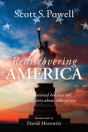
Taking shape over a decade of research and writing, 1776 Rising: America’s Second War of Independence provides a framework of solutions to America’s insurmountable government debt, the consequences of censorship and cancellation, the loss of equal justice, the politicization of the courts, the China threat, and even what to do about the seditious activity of US government officials who plotted to destroy the presidency of Donald Trump.
The book also explains why the country that defeated fascism and communism in the same century now appears unable to balance a budget, defend borders and law enforcement, or agree on what a woman is. Why institutions that once commanded near-universal trust now command near-universal suspicion.
The short of it is that America’s troubles are not four separate crises—economic, military, political, and cultural—but one crisis wearing four faces. The reckless compounding of our national debt is a moral crisis, with this generation leaving next generations with unsurmountable debt. The politicization of our courts and intelligence agencies is not a legal problem; it’s what happens when a shared standard of truth is lost. The hollowing out of public schools, the rise of political violence, the erosion of the melting pot into rival tribes—these are not unconnected headlines. They are downstream of the same source: the detachment of America from the moral and spiritual foundation on which it was built.
Most importantly, this book reassures the reader that we can fix what has fundamentally come loose and find clear answers to the crisis of the American soul.
Discover more
About the author
Scott Powell has enjoyed a career split between theory and practice with thirty-five years of experience as an entrepreneur and founder of two companies. He has been a media fellow and visiting fellow at Stanford’s Hoover Institution for six years, and Senior Fellow at the Discovery Institute since 2012. He has taught international economics at the graduate school level, been a guest on over 300 national radio and TV shows, and published over 450 articles on subjects that include the US Constitution, law, economics, business, domestic and foreign policy, culture, and religion in the Wall Street Journal, Investor’s Business Daily, USA Today, Barron’s Financial, The Federalist, American Spectator, American Thinker, Townhall, and dozens of other newspapers and journals in the US, Japan, and Europe.
Scott’s book, Covert Cadre, was hailed by National Review as “the most important book of the 1988 election year.” Powell has been called on twice to provide expert witness testimony regarding presidential cabinet nominations—once for the Senate Armed Services Committee and some years later for the Select Committee on Intelligence at the time of a controversial nominee for CIA Director—who ended up withdrawing his nomination.
Following the 2008 mortgage and banking collapse, he wrote the editorial in Barron’s Financial about what happened and why regarding moral failings that led to the Great Recession.
Scott Powell graduated from the University of Chicago with honors (BA and MA) and received his PhD in political and economic theory from Boston University, writing his dissertation on the determinants of entrepreneurial activity and economic growth. This is his fourth book.