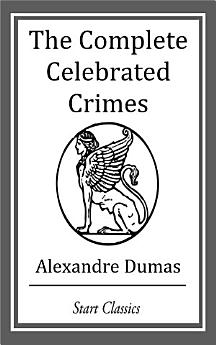
The Complete Celebrated Crimes
เม.ย. 2014 · Simon and Schuster
eBook
1304
หน้า
family_home
มีสิทธิ์
info
เกี่ยวกับ eBook เล่มนี้
Alexandre Dumas, author of The Three Musketeers and so many sequels, all but invented the action adventure novel, and certainly he has few peers in all the years since. His stories are thrilling works of derring-do, foul deeds, close escapes, and glorious victories. In this third volume of his Celebrated Crimes, Dumas tells the tale of Mary Queen of Scots, a woman who suffered a violent death, and around whose name an endless controversy has waged. Dumas goes carefully into the dubious episodes of her stormy career, but does not allow these to blind his sympathy for her fate. Mary, it should be remembered, was closely allied to France by education and marriage, and the French never forgave Elizabeth the part she played in the tragedy. This book was not written for children. Dumas has minced no words in describing the violent scenes of a violent time. In some instances facts appear distorted out of their true perspective, and in others the author makes unwarranted charges. The careful, mature reader -- for whom the books are intended -- will recognize and allow for this fact.
Alexandre Dumas, author of The Three Musketeers and so many sequels, all but invented the action adventure novel, and certainly he has few peers in all the years since. His stories are thrilling works of derring-do, foul deeds, close escapes, and glorious victories. In this third volume of his Ce...
สำรวจหนังสือเล่มอื่นๆ
เกี่ยวกับผู้แต่ง
After an idle youth, Alexandre Dumas went to Paris and spent some years writing. A volume of short stories and some farces were his only productions until 1927, when his play Henri III (1829) became a success and made him famous. It was as a storyteller rather than a playwright, however, that Dumas gained enduring success. Perhaps the most broadly popular of French romantic novelists, Dumas published some 1,200 volumes during his lifetime. These were not all written by him, however, but were the works of a body of collaborators known as "Dumas & Co." Some of his best works were plagiarized. For example, The Three Musketeers (1844) was taken from the Memoirs of Artagnan by an eighteenth-century writer, and The Count of Monte Cristo (1845) from Penchet's A Diamond and a Vengeance. At the end of his life, drained of money and sapped by his work, Dumas left Paris and went to live at his son's villa, where he remained until his death.
After an idle youth, Alexandre Dumas went to Paris and spent some years writing. A volume of short stories and some farces were his only productions until 1927, when his play Henri III (1829) became a success and made him famous. It was as a storyteller rather than a playwright, however, that Dum...
ให้คะแนน eBook นี้
แสดงความเห็นของคุณให้เรารับรู้
ข้อมูลในการอ่าน
สมาร์ทโฟนและแท็บเล็ต
ติดตั้งแอป Google Play Books สำหรับ Android และ iPad/iPhone แอปจะซิงค์โดยอัตโนมัติกับบัญชีของคุณ และช่วยให้คุณอ่านแบบออนไลน์หรือออฟไลน์ได้ทุกที่
แล็ปท็อปและคอมพิวเตอร์
คุณฟังหนังสือเสียงที่ซื้อจาก Google Play โดยใช้เว็บเบราว์เซอร์ในคอมพิวเตอร์ได้
eReader และอุปกรณ์อื่นๆ
หากต้องการอ่านบนอุปกรณ์ e-ink เช่น Kobo eReader คุณจะต้องดาวน์โหลดและโอนไฟล์ไปยังอุปกรณ์ของคุณ โปรดทำตามวิธีการอย่างละเอียดในศูนย์ช่วยเหลือเพื่อโอนไฟล์ไปยัง eReader ที่รองรับ