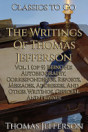
The Writings Of Thomas Jefferson: Restored Classics to Go Edition
About this ebook
Discover more
About the author
Thomas Jefferson was born in 1743 in colonial Virginia, educated at the College of William and Mary, and trained as a lawyer before becoming one of the defining public figures of the American Revolution and the early republic. A gifted writer as well as a statesman, he helped shape the language of liberty and the ideals of a new nation through his political essays, diplomatic correspondence, public addresses, reports, and private reflections. He served as the principal author of the Declaration of Independence, later held office as governor of Virginia, minister to France, secretary of state, vice president, and president of the United States, and remained active in public life long after leaving office. Jefferson's writings reveal a mind deeply engaged with questions of individual rights, self-government, education, science, religion, agriculture, and the responsibilities of citizenship. They also show the tensions of his era, especially the contradiction between democratic ideals and the reality of slavery, a conflict that continues to shape how readers understand his legacy today. His work remains relevant because it captures both the hopeful ambition and the moral complexity of the American experiment, offering insight into how nations are imagined, argued for, and continually redefined. Readers interested in political thought, American history, the language of freedom, and the personal voice behind public leadership will find Jefferson especially rewarding to read.