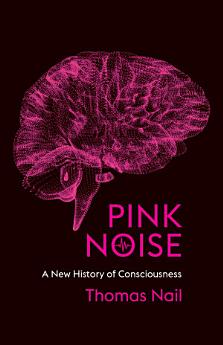
Pink Noise: A New History of Consciousness
About this ebook
In Pink Noise, philosopher Thomas Nail argues that this discovery requires a fundamental rethinking of how we understand the mind. Drawing on neuroscience, psychology, evolutionary biology, physics, and the history of philosophy, this book traces how the assumption of a random brain shaped modern theories of consciousness and how growing evidence for pink noise challenges those assumptions.
Instead of treating consciousness as a substance or a computational product emerging from otherwise chaotic neural activity, Nail presents consciousness as a dynamic, self-organizing process rooted in the brain’s intrinsic patterns of activity. Along the way, he explores the implications of pink noise for evolution, artificial intelligence, mental health, and humanity’s relationship to the natural world.
Synthesizing the latest findings across disciplines, this book is a groundbreaking account of how pink noise research is reshaping our understanding of consciousness. It provides a provocative and accessible new framework for thinking about the mind, showing how the patterns connecting human experience might be the same ones woven throughout nature.