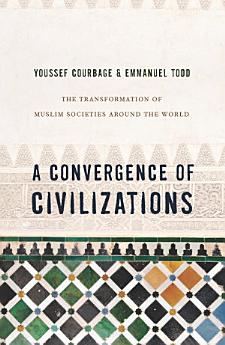
A Convergence of Civilizations: The Transformation of Muslim Societies Around the World
About this ebook
The historical and geographical sweep of this book discredits the notion of a specific Islamic demography. The range of fertility among Muslim women, for example, is as varied as religious behavior among Muslims in general. Whether agnostics, fundamentalist Salafis, or al-Qaeda activists, Muslims are a diverse group that prove the variety and individuality of Islam. Youssef Courbage and Emmanuel Todd consider different degrees of literacy, patriarchy, and defensive reactions among minority Muslim populations, underscoring the spread of massive secularization throughout the Arab and Muslim world.
In this regard, they argue, there is very little to distinguish the evolution of Islam from the history of Christianity, especially with Muslims now entering a global modernity. Sensitive to demographic variables and their reflection of personal and social truths, Courbage and Todd upend a dangerous meme: that we live in a fractured world close to crisis, struggling with an epidemic of closed cultures and minds made different by religion.
Discover more
About the author
Youssef Courbage is research director at the French National Institute for Demographic Studies. His research concerns Arab and Muslim countries, Asia and Eastern Europe, and interactions among demography and politics. He has studied economics, sociology, demography, and urban planning at Lebanese and French universities.
Emmanuel Todd is a researcher at the French National Institute for Demographic Studies and author of numerous books, including After the Empire: The Breakdown of the American Order, The Final Fall: An Essay on the Decomposition of the Soviet Sphere, The Making of Modern France: Ideology, Politics, and Culture.