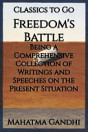
Third Class In Indian Railways: Restored Classics to Go Edition
About this ebook
Discover more
About the author
Mahatma Gandhi, born in 1869 in Porbandar, India, emerged as one of the most influential moral and political thinkers of the modern world. Trained in law in London and shaped by years in South Africa, he developed the principles of nonviolent resistance, self-discipline, and truthfulness that would guide his leadership in India's struggle for independence. Rather than relying on force, Gandhi believed in the power of conscience, civil disobedience, and personal example, and his writing and public life consistently reflected these convictions. His essays, speeches, and reflections often drew on everyday experiences to expose injustice, especially the humiliations of colonial rule, the inequalities of caste, poverty, and the need for ethical living. Across his work, he championed simplicity, communal harmony, self-reliance, and the dignity of ordinary people, themes that remain deeply relevant in a world still marked by inequality, political division, and moral uncertainty. Gandhi's legacy extends far beyond India: he helped redefine what political courage could look like and inspired movements for civil rights and social change around the globe. Readers today continue to find in his life and thought a challenging call to live with integrity and compassion. Those who are interested in history, social justice, philosophy, and the moral power of nonviolence will especially enjoy reading Gandhi.