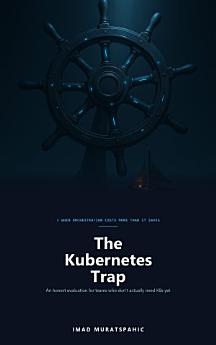
The Kubernetes Trap: When Orchestration Costs More Than It Saves - An Honest Evaluation for Teams Who Don't Actually Need K8s Yet
Oct 2026 · neobooks
Ebook
128
Pages
family_home
Eligible
info
About this ebook
Somewhere in your infrastructure there's probably a Kubernetes cluster nobody can fully explain: a namespace called legacy-do-not-touch, a Helm chart whose values override a file that overrides another file, and an on-call engineer who dreads a 3 a.m. alert because it could mean a dead pod or a struggling control plane, with no way to tell which without digging in. This book gives an honest accounting instead of a verdict: what Kubernetes genuinely does well and at what scale, the overhead a demo never mentions, and real alternatives like Docker Compose, Nomad and serverless, each judged on its merits. A readiness scorecard turns it into a number for your team, and the chapters that follow help you act on it: migrate off, make an inherited cluster less painful, or cut cost while staying.
Somewhere in your infrastructure there's probably a Kubernetes cluster nobody can fully explain: a namespace called legacy-do-not-touch, a Helm chart whose values override a file that overrides another file, and an on-call engineer who dreads a 3 a.m. alert because it could mean a dead pod or a s...
Discover more
About the author
Imad Muratspahic is an independent author of practical how-to guides, technical handbooks, history and fiction. The books aim to be clear, honest and useful from the first page.
Imad Muratspahic is an independent author of practical how-to guides, technical handbooks, history and fiction. The books aim to be clear, honest and useful from the first page.
Rate this ebook
Tell us what you think.
Reading information
Smartphones and tablets
Install the Google Play Books app for Android and iPad/iPhone. It syncs automatically with your account and allows you to read online or offline wherever you are.
Laptops and computers
You can listen to audiobooks purchased on Google Play using your computer's web browser.
eReaders and other devices
To read on e-ink devices like Kobo eReaders, you'll need to download a file and transfer it to your device. Follow the detailed Help Center instructions to transfer the files to supported eReaders.