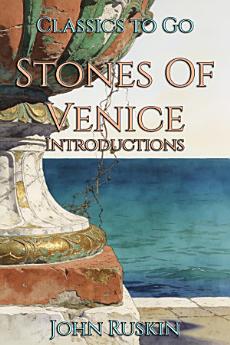
Stones Of Venice: Restored Classics to Go Edition
About this ebook
Discover more
About the author
John Ruskin was one of the most influential English writers, critics, and social thinkers of the nineteenth century, a man whose wide-ranging curiosity took him from art and architecture to economics, education, and the moral life of society. Born in London and educated with unusual intensity, he developed early into a formidable observer of nature and a passionate defender of beauty, craftsmanship, and truth in public life. Over the course of a long career, he became famous for his criticism of painting and architecture, his advocacy of Gothic design, and his powerful prose that helped shape Victorian taste and debate. He also wrote with increasing urgency about labor, inequality, and the spiritual cost of industrial modernity, arguing that a healthy society must value human dignity as much as profit. His work often returns to themes of careful seeing, moral responsibility, the relationship between art and civilization, and the danger of reducing life to utility alone. These concerns remain strikingly relevant today, especially in an age still wrestling with mass production, environmental strain, and the search for meaningful work and beauty in everyday life. Ruskin's legacy endures because he insisted that art is never merely decorative: it reveals how a culture sees itself and treats its people. Readers who enjoy eloquent prose, social criticism, art history, and big moral questions will find him especially rewarding.