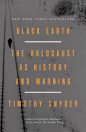
Black Earth: The Holocaust as History and Warning
About this ebook
The Holocaust is often viewed through the death factories of Auschwitz and the bureaucracy of mass murder. Yet by the time the first gas chambers became operational, more than a million Jews had already been shot over pits and ravines in the lawless killing zones created by the German colonial war in the east.
Black Earth places the Nazi extermination of the Jews inside the political destruction of eastern Europe. It asks why Jews were more vulnerable in some places than others, and how citizenship, institutions, occupation and the removal of state protection shaped chances of survival.
Timothy Snyder also returns to Hitler’s obsession with land and food showing how racial ideology and the pursuit of Lebensraum turned eastern Europe into bloodlands.
By making the political conditions of mass murder more intelligible, Snyder challenges our comforting belief that the Holocaust belongs to circumstances that can never recur. As ideological and environmental challenges mount today, our societies might be more vulnerable than we would like to think.
'Wholly readable and utterly persuasive’ Observer
Discover more
Ratings and reviews

- Flag inappropriate
About the author
‘When Timothy Snyder’s book Bloodlands: Europe Between Hitler and Stalin was published in 2010, it quickly established its author as one of the leading historians of his generation, a scholar who combined formidable linguistic skills — he reads or speaks 11 languages — with an elegant literary style, white-hot moral passion and a willingness to start arguments about some of the most fraught questions of the recent past.’ New York Times
Timothy Snyder is Levin Professor of History at Yale University, and has written and edited a number of critically acclaimed and prize-winning books about twentieth-century European history: Bloodlands won the Hannah Arendt Prize, the Leipzig Book Prize for European Understanding, the Ralph Waldo Emerson Award in the Humanities and the literature award of the American Academy of Arts and Letters. Black Earth was longlisted for the Samuel Johnson Prize.
Snyder is a frequent contributor to the New York Review of Books and the Times Literary Supplement. He is a member of the Committee on Conscience of the United States Holocaust Memorial Museum, a permanent fellow of the Institute for Human Sciences, and sits on the advisory council of the Yivo Institute for Jewish Research.