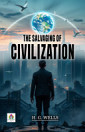
The World Set Free

· Prabhat Prakashan
Ebook
177
Pages
Tools

About this ebook

The World Set Free by H.G. Wells is a prescient and gripping science fiction novel that unfolds a fascinating narrative about the future of humanity, revolving around the discovery and implications of nuclear energy. Written in 1914, the book dives deep into themes of technological advancement, political upheaval, and societal change, painting a vivid picture of a world transformed by science. With remarkable foresight, Wells introduces readers to a time when the notion and potential devastation of atomic energy becomes a reality, leading to a new epoch in humanity's timeline.

At its core, The World Set Free serves as both a thrilling adventure and a profound social commentary. Wells explores the existential dilemmas faced when humanity harnesses immense power—how it can be both a catalyst for unprecedented progress and a harbinger of destruction. As the characters navigate a web of political intrigue and ethical considerations surrounding advanced technology, readers are compelled to grapple with the implications of humanity and technology in a rapidly evolving landscape. The interplay of innovation and its potential for chaos reflects Wells' deep understanding of the human condition and his anticipation of future challenges.

The narrative intricately depicts a futuristic society grappling with the moral complexities of its new innovations. Wells invites his audience to consider the duality of progress—while scientific breakthroughs can illuminate pathways to a harmonious existence, they can equally sow the seeds of conflict. In a world set on the brink of war and peace, the exploration of political ideas resonates throughout the story. The trajectory towards global cooperation versus isolationism becomes a central theme, emphasizing the necessity for collaboration as humanity navigates its most treacherous challenges.

Wells excels in illustrating the post-apocalyptic world resulting from mankind's recklessness, offering a cautionary tale that serves as a timeless reminder of the responsibility that accompanies scientific discovery. As the plot unfolds, powers clash, and lives are irrevocably changed, the author explores the delicate balance of human experience amidst chaos. The emotional depth of the characters adds a poignant layer to the narrative while bringing humanity's struggle against its own creations to the forefront.

Notably, Wells' visionary prose not only entertains but imparts a message about the ethical responsibilities inherent in scientific advancements. Through vivid storytelling, he delves into the consequences of nuclear power, shaping a narrative that resonates strongly with contemporary audiences, given today's global concerns surrounding energy use and environmental sustainability.

In conclusion, The World Set Free is an evocative exploration of humanity's capacity for both greatness and folly. The combination of dystopian themes, a rich narrative filled with characters driven by hope and ambition, and Wells' remarkable ability to predict the complexities of our future all contribute to the novel's enduring appeal. As a literary classic, it serves as an essential read for those interested in understanding the profound impact of technology on society and the ethical conundrums that accompany innovation. The World Set Free stands as a testament to H.G. Wells' genius, making it indispensable for both science fiction enthusiasts and curious minds alike.

The World Set Free by H.G. Wells is a prescient and gripping science fiction novel that unfolds a fascinating narrative about the future of humanity, revolving around the discovery and implications of nuclear energy. Written in 1914, the book dives deep into themes of technological advancement, p...

Discover more

About the author

H.G. Wells was born in Bromley, England, the son of an unsuccessful merchant. After a limited education, he was apprenticed to a dry-goods merchant, but soon found he wanted something more out of life. He read widely and got a position as a student assistant in a secondary school, eventually winning a scholarship to the College of Science in South Kensington, where he studied biology under the British biologist and educator, Thomas Henry Huxley. After graduating, Wells took several different teaching positions and began writing for magazines. When his stories began to sell, he left teaching to write full time. Wells's first major novel, The Time Machine (1895), launched his career as a writer, and he began to produce a steady stream of science-fiction tales, short stories, realistic novels, and books of sociology, history, science, and biography, producing one or more books a year. Much of Wells's work is forward-looking, peering into the future of prophesy social and scientific developments, sometimes with amazing accuracy. Along with French writer Jules Verne, Wells is credited with popularizing science fiction, and such novels as The Time Machine and The War of the Worlds (1898) are still widely read. Many of Wells's stories are based on his own experiences. The History of Mr. Polly (1910) draws on the life of Wells's father. Kipps (1905) uses Wells's experience as an apprentice, and Love and Mr. Lewisham (1900) draws on Wells's experiences as a school teacher. Wells also wrote stories showing how the world could be a better place. One such story is A Modern Utopia (1905). As a writer, Wells's range was exceptionally wide and his imagination extremely fertile. While time may have caught up with him (many of the things he predicted have already come to pass), he remains an interesting writer because of his ability to tell a lively tale.
H.G. Wells was born in Bromley, England, the son of an unsuccessful merchant. After a limited education, he was apprenticed to a dry-goods merchant, but soon found he wanted something more out of life. He read widely and got a position as a student assistant in a secondary school, eventually winn...

Rate this ebook

Tell us what you think.

Reading information

Smartphones and tablets
Install the Google Play Books app for Android and iPad/iPhone. It syncs automatically with your account and allows you to read online or offline wherever you are.
Laptops and computers
You can listen to audiobooks purchased on Google Play using your computer's web browser.
eReaders and other devices
To read on e-ink devices like Kobo eReaders, you'll need to download a file and transfer it to your device. Follow the detailed Help Center instructions to transfer the files to supported eReaders.