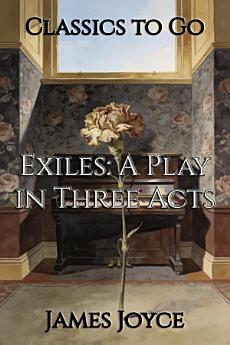
Exiles: A Play in Three Acts: Restored Classics to Go Edition
About this ebook
Discover more
About the author
James Joyce was born in Dublin in 1882 and grew up in a city that would become both the physical and imaginative center of his writing. Educated by Jesuits and later at University College Dublin, he left Ireland as a young man and spent much of his adult life in self-imposed exile in Trieste, Zurich, and Paris, where financial hardship, ill health, and persistent controversy accompanied his work. Joyce became one of the defining figures of modern literature through his radical experiments with language, interior consciousness, and narrative form, transforming the novel and drama alike with a daring that still feels fresh. His writing returns again and again to questions of identity, belonging, artistic freedom, religion, sexuality, and the paralysis of modern life, exploring how private thought and public experience shape one another. These concerns remain deeply relevant today, especially in a world still wrestling with migration, cultural memory, and the tension between individual desire and social expectation. Joyce's legacy lies not only in his technical brilliance but in his refusal to simplify the complexity of human experience, opening paths that later writers continue to follow. Readers who enjoy ambitious, intellectually challenging literature, psychological depth, and finely tuned explorations of modern life will find Joyce especially rewarding.