Aladdin's Lamp
Feb 2009 · Vintage
star
4 reviews
Ebook
288
Pages
Tools
info
family_home
Eligible
info
About this ebook
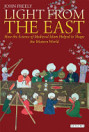
Aladdin’s Lamp is the fascinating story of how ancient Greek philosophy and science began in the sixth century B.C. and, during the next millennium, spread across the Greco-Roman world, producing the remarkable discoveries and theories of Thales, Pythagoras, Hippocrates, Plato, Aristotle, Euclid, Archimedes, Galen, Ptolemy, and many others. John Freely explains how, as the Dark Ages shrouded Europe, scholars in medieval Baghdad translated the works of these Greek thinkers into Arabic, spreading their ideas throughout the Islamic world from Central Asia to Spain, with many Muslim scientists, most notably Avicenna, Alhazen, and Averroës, adding their own interpretations to the philosophy and science they had inherited. Freely goes on to show how, beginning in the twelfth century, these texts by Islamic scholars were then translated from Arabic into Latin, sparking the emergence of modern science at the dawn of the Renaissance, which climaxed in the Scientific Revolution of the seventeenth century.
Aladdin’s Lamp is the fascinating story of how ancient Greek philosophy and science began in the sixth century B.C. and, during the next millennium, spread across the Greco-Roman world, producing the remarkable discoveries and theories of Thales, Pythagoras, Hippocrates, Plato, Aristotle, Euclid,...
Discover more
Ratings and reviews
4 reviews

A Google user
- Flag inappropriate
October 18, 2011
Aladdin's Lamp is Freely's attempt at showing the world how the exchange of ideas helped to preserve the writings of ancient philosophers. He places particular emphasis on the contributions of the Islamic culture in the preserving of Greek philosophy and contributing to the growing scientific knowledge before passing it on to Europe during the Renaissance. While Freely brings up valid points throughout the book he includes a multitude of unnecessary dates, people, and scientific works. By the time most readers wade through the mess of frivolous information they are simply not interested in the book enough to get to the main points. The book has an interesting message and is technically well written but will be a dry and boring read to anyone not a history fanatic.
About the author
John Freely was born in Brooklyn, New York, and grew up in Ireland and New York. He enlisted in the U.S. Navy at seventeen and was in the last two years of World War II, including duty with a commando unit in Burma and China. He went to college on the GI Bill and received his Ph.D. in physics from NYU, after which he did postdoctoral studies at Oxford in the history of science. Since 1960 he has taught physics and the history of science at Bosphorus University (formerly Robert College) in Istanbul, with other teaching posts in Athens, London, and Boston. He is the author of more than forty books including Istanbul: The Imperial City; The Western Shores of Turkey; Strolling Through Athens; The Lost Messiah: In Search of the Mystical Rabbi Sabbatai Sevi; and Jem Sultan: The Adventures of a Captive Turkish Prince in Renaissance Europe.
John Freely was born in Brooklyn, New York, and grew up in Ireland and New York. He enlisted in the U.S. Navy at seventeen and was in the last two years of World War II, including duty with a commando unit in Burma and China. He went to college on the GI Bill and received his Ph.D. in physics fro...
Rate this ebook
Tell us what you think.
Reading information
Smartphones and tablets
Install the Google Play Books app for Android and iPad/iPhone. It syncs automatically with your account and allows you to read online or offline wherever you are.
Laptops and computers
You can listen to audiobooks purchased on Google Play using your computer's web browser.
eReaders and other devices
To read on e-ink devices like Kobo eReaders, you'll need to download a file and transfer it to your device. Follow the detailed Help Center instructions to transfer the files to supported eReaders.