About this ebook
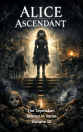
The case begins with a stack of reports that should not exist: disappearances, dolls found in impossible places, neighbourhoods that seem to rearrange themselves, and sightings of the Toymaker and Alice that never align. The detective approaches the investigation with confidence, certain that the legend is nothing more than fear layered over coincidence. But the deeper he looks, the more the story resists him.
Witnesses claim to have seen the Toymaker and Alice, yet their descriptions never match. Some insist the Toymaker is tall, others that he is slight. Some describe Alice as childlike, others as older, sharper, almost human. The detective interviews them all, but the accounts contradict each other so completely that they feel less like differing perspectives and more like glimpses into different realities.
As the investigation continues, the detective begins to doubt not only the witnesses, but himself. Notes he is certain he wrote vanish from his files. Photographs shift when he looks at them a second time. His memories of interviews blur, as though someone has rearranged the order of events behind his back. The more he tries to impose structure on the case, the more the case seems to impose itself on him.
Rumours spread that the detective has become obsessed. Some say he spends nights outside the Toymaker’s workshop, waiting for movement behind the curtains. Others claim he has begun speaking to someone no one else can see. Whether any of this is true is impossible to confirm — the only certainty is that the legend is no longer something he observes from the outside. It is something he has stepped into.
These twenty narrative poems explore the collapse of certainty — the moment when an investigator becomes part of the story he is trying to understand. Each poem stands alone, yet together they form the next movement in the expanding mythos, tracing how a legend can distort memory, identity, and the very shape of truth.
This is the book where the detective enters the shadow. This is where the story bends. This is where the legend begins to look back.
Discover more
About the author
David James is a writer who works at the intersection of poetry, folklore, and atmospheric storytelling. His books are built from short‑form narrative verse — concentrated, cinematic pieces that deliver complete stories in distilled form. He treats each poem as an engineered moment: a glimpse into a world where the ordinary slips, the uncanny surfaces, and the boundaries between memory and myth begin to blur.
His work rejects spectacle in favour of presence. Rather than relying on gore or shock, he builds tension through silence, implication, and the things seen from the corner of the eye. Across his growing catalogue, he explores how legends form, how rumours spread, and how a single strange event can reshape an entire community. The Toymaker series is his most ambitious project to date: a multi‑volume mythos told through hundreds of narrative poems, each one a self‑contained story that contributes to a larger, evolving world.
David’s writing is driven by precision and discipline. He approaches verse as a structural craft — a way of compressing narrative into its most potent form. His poems draw on the atmosphere of abandoned places, the psychology of fear, and the quiet rituals of everyday life. He is interested in how stories travel, how they change in the telling, and how they become part of the cultural landscape.
With a rapidly expanding body of work and a commitment to producing original books at scale, David aims to build a catalogue that functions as both literature and legend. His stories are designed to be read quickly but remembered slowly, leaving echoes that linger long after the final line.
He writes from the United Kingdom, where he continues to develop new sequences, new mythologies, and new experiments in narrative verse — always returning to the same guiding principle: that the most powerful stories are the ones that begin quietly, then refuse to let go.
A complete list of the author’s published works can be found in the back matter of this book, where fully clickable links to both of his webpages are also included in the Author’s Notes section.