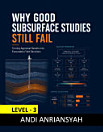
About this ebook
They fail because decisions are made without a clear link between uncertainty and capital.
In capital-constrained environments, traditional subsurface workflows—designed for large fields—often become liabilities. Teams spend millions reducing uncertainty that does not change the decision, while critical commercial and operational risks remain unaddressed.
This book introduces a practical, decision-focused framework for evaluating marginal fields under real-world constraints.
Drawing from years of experience working with asset teams across multiple projects, The Author outlines how to:
- Screen marginal fields without over-investing in early studies
- Align subsurface work with economic sensitivity
- Design appraisal programs that unlock decisions—not just data
- Select development concepts under capital constraints
- Quantify and manage abandonment exposure early
- Define and enforce clear kill criteria before capital is committed
Structured around decision checkpoints rather than technical disciplines, this book provides a practical playbook for engineers, geoscientists, and asset teams working in environments where capital is limited and uncertainty is unavoidable.
This is not a textbook.
This is a decision discipline for making marginal fields economically viable—or knowing when to walk away.
Discover more
Ratings and reviews

- Flag inappropriate

- Flag inappropriate

- Flag inappropriate
About the author
Andi Anriansyah is a senior subsurface professional with over 17 years of experience supporting oil and gas exploration, development, and field optimization projects, primarily within Indonesian operating environments.
Throughout his career, he has worked with multidisciplinary asset teams across operators, service companies, and government-related institutions, contributing to subsurface evaluation, reserves and resource assessment, and field development planning. His work focuses on integrating geological and reservoir understanding with operational, commercial, and economic considerations to support risk-aware decision-making.
He has been involved in a wide range of projects, including marginal field screening, development studies, drilling and work program planning, and recovery optimization initiatives. His experience spans both producing assets and development-stage opportunities, where capital constraints and uncertainty play a critical role in decision outcomes.
His particular interest lies in how subsurface uncertainty translates into capital risk, and how technical teams can structure better decisions under limited data and constrained budgets.